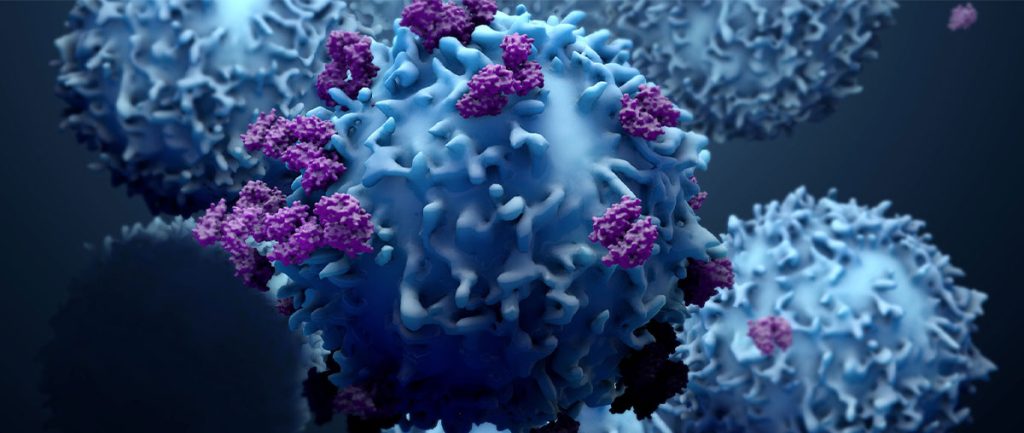
Immune cell analysis
The immune system is one of the body’s most important defense mechanisms, responsible for protecting against viruses, bacteria, and a wide range of harmful pathogens. It also plays a vital role in recognizing, eliminating, and suppressing the growth of abnormal cells, including cancer cells.
This highly coordinated system consists of many naturally produced components, particularly white blood cells, which are generated in the bone marrow and circulate throughout the body via the bloodstream. Their role is to continuously monitor, detect, and respond to foreign or abnormal substances with precision and efficiency.
At our laboratory, selected immune cell populations can be identified and quantified (Immune Testing) using Flow cytometry, an advanced analytical technique that enables accurate immune profiling.
Immune reconstitution panel
The Immune reconstitution panel is an immune testing used to evaluate immune status by analyzing key white blood cell populations within the body’s immune system, including:
- T cell
- B cell
- Natural Killer (NK) cell
- Dendritic Cell (DCs)
This test provides detailed analysis of immune cell types and can be used to assess the recovery and reconstitution of the immune system following Bone Marrow Transplantation (BMT).
Lymphocyte subset
Lymphocytes are a type of white blood cell that play a central role in the body’s immune defense. Produced in the bone marrow and distributed throughout the blood, lymph nodes, and various tissues, they are responsible for recognizing and eliminating pathogens as well as abnormal cells, including cancer cells.
Lymphocytes are broadly classified into three major populations:
• T cell (Total T cells, Helper T cells, and Cytotoxic T cells)
• B cell
• Natural Killer (NK) cell
The Lymphocyte subset measures the distribution and quantity of these key lymphocyte populations, providing valuable information for the assessment of immune status. This test is commonly used in the evaluation and monitoring of individuals with HIV/AIDS, immunodeficiency disorders, cancer, and organ transplant recipients.
Our laboratory provides comprehensive lymphocyte subpopulation analysis using advanced flow cytometry techniques. This test is performed under an ISO 15189-accredited
T Cell
T cells are responsible for regulating immune responses and destroying infected cells. Major subtypes include:
- CD4+ T cell (Helper T cells)
- CD8+ T cell (Cytotoxic T cell)
Our T cell analysis services include:
- Total T-cell (CD3+)
- CD4 Count (CD3+CD4+)
- CD8 Count (CD3+CD8+)
- FOXP3+ Regulatory T Cell
- FOXP3+ Regulatory T Cell Subset
Natural Killer Cell
(NK Cell)
Natural Killer (NK) cells are specialized lymphocytes that play a critical role in immune surveillance. As key components of the innate immune system, NK cells are responsible for identifying and eliminating virus-infected cells and malignant cells without prior sensitization.
Our laboratory offers a comprehensive range of NK cell testing services to evaluate both the quantity and functional activity of NK cells.
NK Cell Quantity
- NK Cell (CD3-/CD16+56+) by Flow Cytometry
NK Cell Activity
- Functional Assessment of NK Cell Cytotoxicity
The NK Cell Activity Test evaluates the ability of NK cells to recognize and destroy target cells. In this assay, NK cells isolated from the sample are co-cultured with cancer-derived target cells. Immunofluorescence-based detection methods are then used to measure target cell destruction, allowing accurate assessment of NK cell cytotoxic function. - NKG2D Expression Analysis by Flow Cytometry
NKG2D is a major activating receptor expressed on NK cells that enables elimination of tumor cells and virus-infected cells. Assessment of NKG2D expression provides insight into NK cell activation and innate immune function, particularly in anti-tumor and antiviral immune responses.
B Cell
B cells are responsible for producing antibodies, which help identify and neutralize pathogens.
Our B cell analysis service includes:
- B Cell panel (CD3-/CD19+CD20+)
Dendritic Cell
Dendritic cell (DC) are a type of white blood cell that serve as professional antigen-presenting cells (APCs), playing a pivotal role in activating the adaptive immune response.
Their principal functions include:
- Detecting and engulfing foreign substances such as viruses, bacteria, and pathogens
- Processing antigens and presenting them to T cells to initiate specific immune responses
- Secreting cytokine to regulate and direct immune activity
Our laboratory provides the following dendritic cell analysis service:
- Dendritic Cells (DCs) (CD14/HLA-DR/CD123/CD11c)